Thursday, April 19, 2007


Next door Mr. R 's son sells walnut products.

Dalgate market


Dalgate is named for the nearby Dall Lock that connects Dall Lake to the inner city waterways. The market, the street fronting on Dall Lake, the rows of very expensive houseboats, the shakira loading docks and the bridge over the lock itself were all very heavily guarded by police when we first arrived. I didn't think much about it until my friend in Canada sent me an email saying she hoped I would be O.K. in such a disturbed area. I hadn't seen very much in the way of disturbance since we have got here, lots of police/soldiers with long guns hanging about, sometimes frisking the odd young man up against a truck, nothing more exciting than you would see on any weekend night on Whyte Avenue.


So I wondered if she knew something I didn't. I googled for recent news about Kashmir, and what do you know, big dust up in the big market downtown three days after we got into town, six people injured and one killed when a group attacked a machine gun post. I asked one guy about it and he said that people in that neighborhood were getting very angry about the mess the Indian police were creating in the roadways with their coils of razor wire, garbage and broken brick left lying all over the roadway. Srinagar is not like other cities in India. It's very clean, no garbage at all left lying around on the street. The narrow flagstone side streets are washed everyday by the people in the houses alongside them. The air is wonderful, very little of that stench of human and animal excrement and rotting vegetables in every unused nook and cranny that is such a feature of southern India, nor so much vehicular traffic that car exhaust is noticeable and no plastic bags. About the only place I noticed Indian style garbage tips was over the side of the canal that runs along Dalgate street, beside the little squatter cabins. However, attacking a military type stronghold seems a little extreme protest for civic cleanliness. Couldn't get much info about it though, the Kashmir News Agency website was off line when I tried to access the story.


Anyway, the police must have known what was planned, the security around the tourist section of town was very extensive when we arrived, they have since stood down a bit, not so many guys with guns standing around now. However it's obvious they are looking for someone, we keep encountering groups of them standing around odd corners of otherwise quiet streets prepared and waiting for someone.


Many of Srinagar's buildings are scarred by fire. The one in the photos above was just across the narrow street from a completely burnt building. All over the city there are signs of fire, damaged roofs and broken panes of glass on the third and fourth floors of otherwise very handsome brick buildings. The loss of it's tourist industry in the early eighties devastated the city's economy. Some people moved away and just abandoned their property. Other owners just use the floors that are still habitable, like my favorite bakery.. Business from Indian tourists is slowly recovering but foreigners are still staying away. There is high unemployment for educated young Kashmiri's and not much money in the private sector for infrastructure repair. Srinagar makes me think of a still beautiful woman with broken grimy nails and hands stained and scarred from digging her food out of the ground.


Dalgate is very much "the" tourist centre of the city. Dalgate market and all the shops along the boulevard that faces the water are there to service the houseboats and the hotels. Our hotel is along a street that runs at right angles to the boulevard facing the houseboats up at the end of the lake. I guess all those hotels have been built on landfill pushed into the lake to create more dry land to build on. Lately the government has accepted a large loan from the World Bank to clean up Dall Lake and some of those buildings next to the water are scheduled for demolition. Dall Lake is a rather small, very shallow lake and pollution from the large numbers of buildings on the shore, the many houseboats floating in the middle and the floating gardens behind them are endangering it. I noticed a great deal of blue green algae blooms just under the surface waiting to pop up on shakira rides around the lake.

John's house


One of the first things I did when we reached Srinagar was phone up the contact number a friend of mine in Puttaparthi had given me to reach his relatives. After a few frustrating conversations with people who only knew enough English to tell me they did not understand English, I finally go a hold of John, still sweltering in Puttaparthi and told him what was happening. Later that evening his brother and the guy who works in his store, Ayoub came over and took us out to the far end of town to introduce us around John and Ayoub's extended family. I took some photos from the function room on the top floor of the house.That is John's brother with the deer in the headlights look..

Monday, April 9, 2007


April 4

We went up to a shrine on the top of hill that rises from the shores of Dall Lake. Remi calls it Solomon's Tomb, the locals have a different story. You can see the geography of the area very clearly. Legend has it that Shrinegar was once a lake, I can believe it. It lies perfectly flat on the floor of a large valley, threaded by waterways, some of which look like big meandering oxbows some are the die straight rulers of canals. It was an overcast day so it was hard to get good photos. I'll go up again on a clearer day and try again.

The most entertaining part of the trip were the guards. The whole mountain is in the Indian Forestry Preserve so the entrance is guarded by a sand banked machine gun emplacement and sentries to check your id. Big signs at the entrance saying no inflammables such as cigarette lighters so I offered the guy at the bottom mine to hold until I got back down, he waved it off. At the top just before the steps up to the shrine, more soldiers and machine gun and a ladies check room. You cannot take a camera up there. The army ladies fondled my tits, crotch and butt, searched my purse, camera bag and pockets and confiscated my camera, cigarettes, lighter and extra camera chip. When I got back down from the shrine there were only four cigarettes left in my almost full package.

Hmmm! Interesting. So the gals in the Indian Army are cigarette smoking dykes. Guess sex with the guys might be a little dangerous. Or it might have been my clothing. I was wearing khaki coloured cargo pants, a tan coloured bush shirt, a dark burgundy long sleeved man's shirt, carrying a black trench coat and wearing my cheap as dirt Amritsar machine woven shawl. Maybe they were trying to figure out if I was a man or a woman.

Remi's entertainment for the afternoon was arguing with the rickshaw driver. We had used this guy before, he had overcharged me for a run across town and back to deliver Manzoor's package so I would not have hired him again, but Remi called him over. He agreed to take us up and back down the mountain for 150 rs, our hotel keeper had said that 100rs was the standard. When we got back down we gave him 200rs but he demanded 400rs. Followed us right into a restaurant and cried the blues to the restaurant staff, had a waiter coming over to the table to tell us we should give him 50rs more. Very loud and embarrassing event. Remi loves this tussle with rickshaw drivers everywhere he goes.

April 3
New Shrinegar is a stone city. We went to visit the family workshop of one of the merchants Remi knows from Puttaparthi. He recognized him on the street. Remi is much happier today. Mustafa's family lives in an area of the city where every house and yard is surrounded by a high stone fence. Block after block of gray stone bordering seriously potholed lanes. Only the cemeteries have low walls you can see over. There are a lot of them.


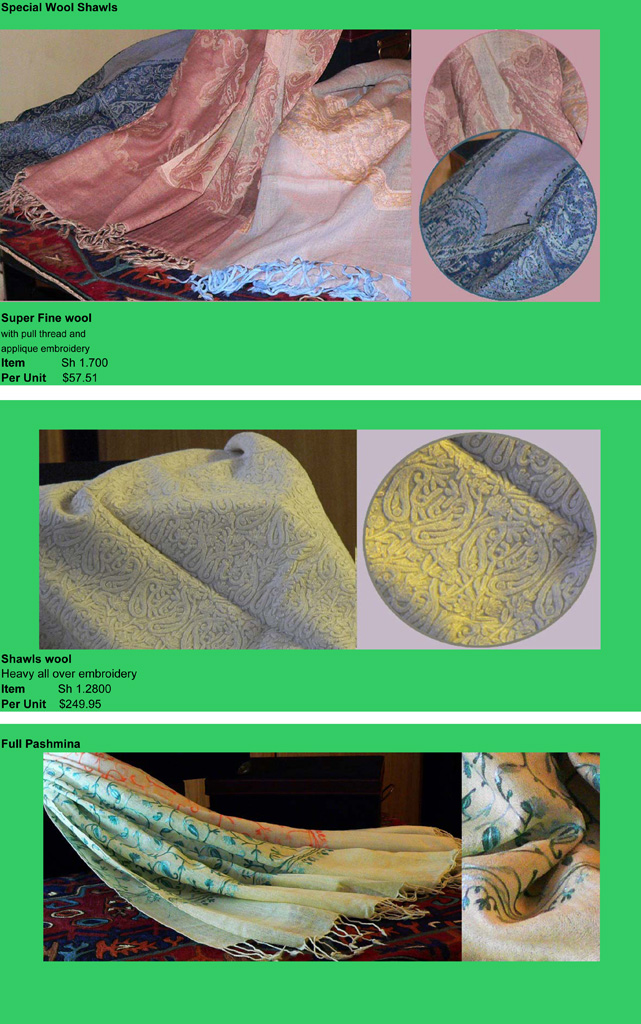
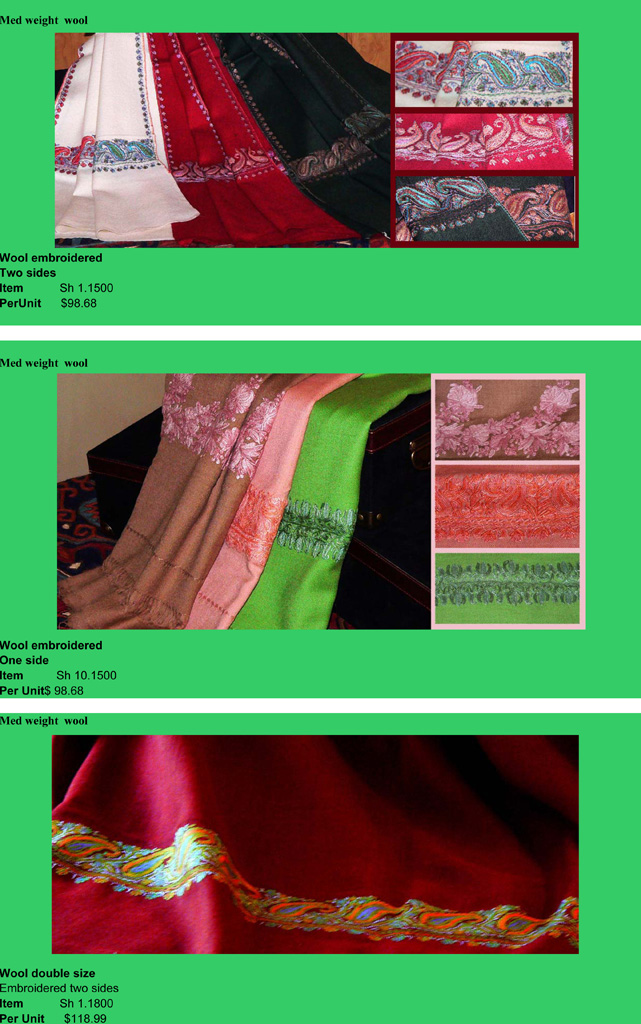
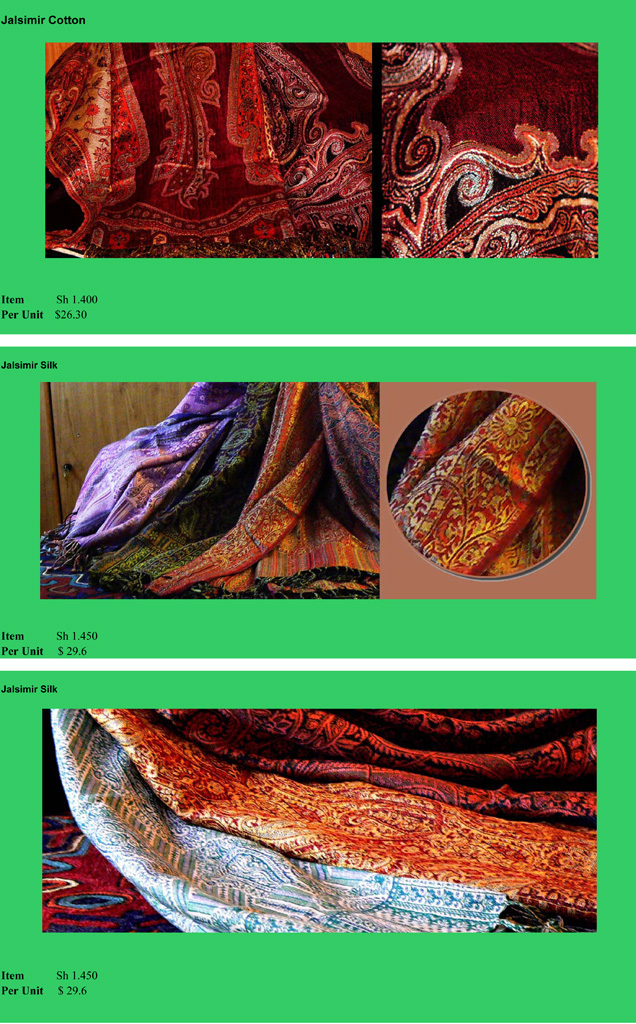
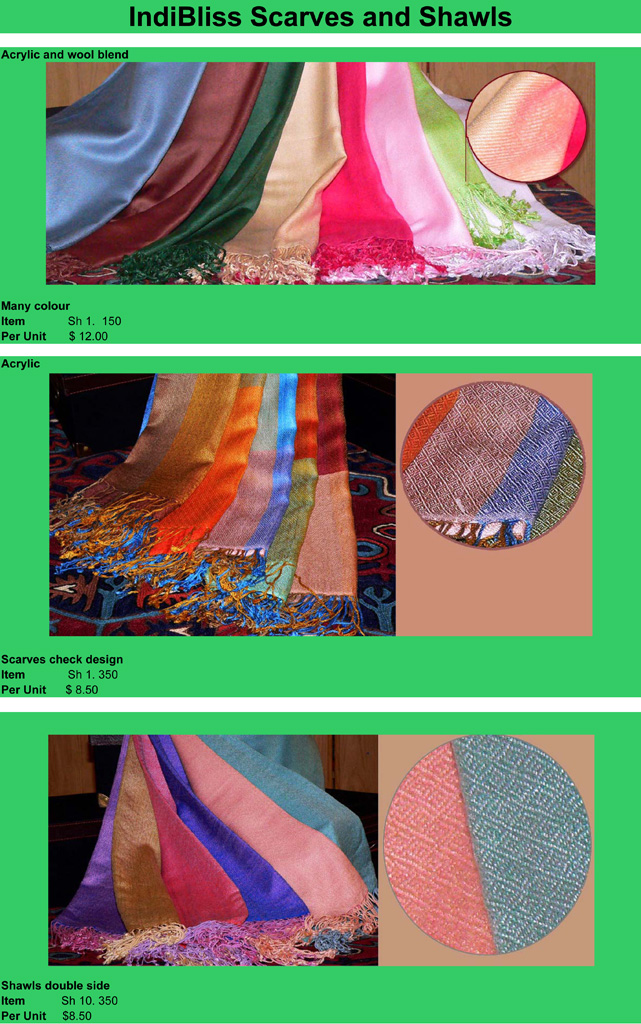
The young merchant from Puttaparthi gave us tea and cookies and told us about all the work involved in creating a fine shawl. His brother takes almost a day to weave a cloud soft pashm wool on a hand loom, then his father, a master embroiderer spends three months painstakingly embroidering the delicate all over patterns that has been drawn on the fabric by another craftsman. I have seen these shawls selling for 10,000 rs in Puttaparthi, that's about $275 Canadian. He showed us one masterpiece of solid embroidery that looked like it should really be in a museum. Three years work The family also owns machine looms,100 shawls a day, any thickness or quality of wool you care to specify on about about eight or so looms that look like they came from eighteenth century Manchester. This is what I came to Kashmir to see.


I even held in my very own hands a shantoosh shawl, the queen of wool. They start at $1000 American before embroidery. I would never buy one though even if I had that kind of money. They are made from the belly and neck hair of a wild mountain antelope. People used to just collect the fiber that pulled off the animal on bushes during the shedding season in the spring. It is priced in grams. But there is so much money in the wool that greedy people are shooting the animal and driving it over the brink into extinction. I'll stick with wool. Now if I can only find people willing to pay more than twenty dollars for a piece of weavers art back home.